Practical guides
Creating calm with nature posters in a busy family lounge
Creating calm with nature posters in a busy family lounge. Practical guide for premium art posters. Studio Vallor.
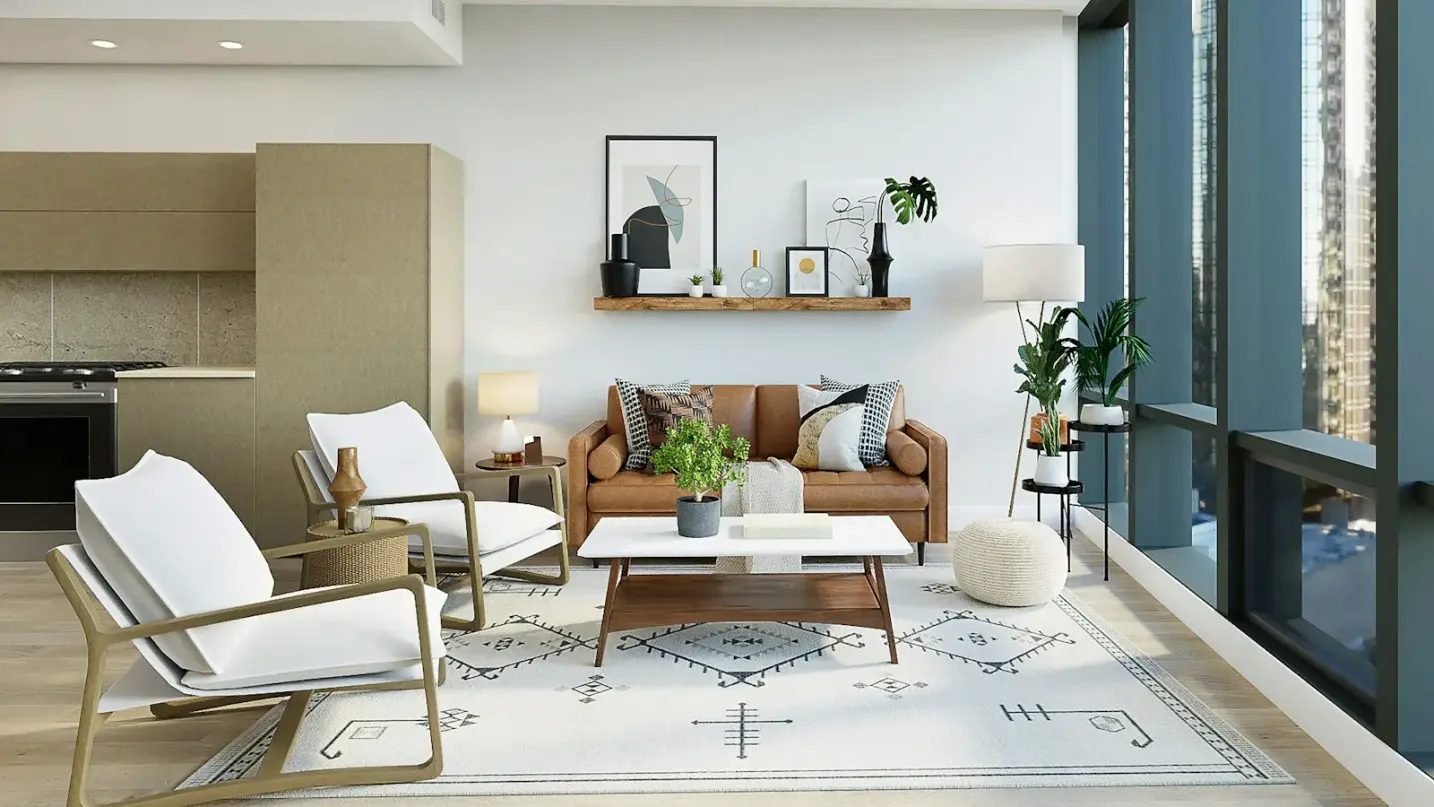
A busy family living room is rarely quiet, and that is not a design failure. Shoes appear by the sofa. Building blocks migrate under the coffee table. Someone is always halfway through a snack, a homework sheet, or a conversation that needs the television off. The wall opposite that daily traffic still has a job. It can either add another layer of noise, or it can offer a soft place for the eye to land. Soft botanical and landscape posters do the second job well when they are chosen as adult calm rather than as cartoon scenery for children. This guide is about creating that calm with nature posters in a lounge that still belongs to everyone.
Studio Vallor prints premium art posters on matte 250 g/m² art paper with European production and sustainable inks. The Nature universe is the natural starting point for foliage, quiet fields, and open outdoor air that settles a wall without turning the room into a theme park. Browse those editions in the nature collection, compare atelier formats across the posters catalogue, and keep the wider collections index nearby if you want Travel, Abstract, or Children pieces in adjacent rooms. The goal here is practical: visual rest amid toys and traffic, premium materials that survive real family life, and placement that still looks intentional when the cushions are crooked.
Premium calm is not the same as a sterile showroom. You do not need to hide every toy before the wall can work. You need an image with breath, a paper that does not glare, and a hang height that respects both seated adults and children who pass underneath. Soft botanicals, misty horizons, and quiet plant studies give a family lounge a longer visual rhythm than loud character prints or neon jungle graphics. The room can stay lived in. The wall can still feel composed.
Why this matters for premium art prints
A family living room asks more of a poster than a guest bedroom does. You see the wall at breakfast when the light is flat, at mid-afternoon when someone is building a fort, and at nine in the evening when lamps are on and the floor is only half cleared. A cheap thin print that looked fine in a phone mock-up often fails that marathon. It warps. It flashes under a floor lamp. The colour that felt fresh online goes chalky beside real plant pots and oak furniture. Premium art paper matters here because the print has to remain readable while the rest of the room keeps changing.
Matte 250 g/m² stock is the practical face for that kind of day. The matte surface scatters daylight and lamp light instead of throwing a bright rectangle back into your eyes when you sit down. The weight helps the sheet hang flatter, so soft leaf edges stay soft instead of buckling into waves that catch every side light. In a busy lounge, you rarely have the luxury of perfect museum lighting. You have windows, ceiling spots, a television glow, and whatever lamp someone dragged closer for homework. Matte forgives that mix. Gloss does not.
There is also a psychological reason to choose nature with care. Family rooms already carry visual stimulation: baskets, remote controls, school bags, bright plastic, patterned throws. If the main wall art joins that chorus with cartoon animals, ultra-saturated jungles, or collage-style typography, the room never settles. Soft botanicals act as visual rest. A single branch against a linen ground, a quiet canopy with open sky, a field of muted greens that do not compete with toy colours, these images give the nervous system a slower pace without asking the children to leave. Adults notice the calm first. Children often notice it as atmosphere rather than as a lesson. That is enough.
Premium also means the image was composed to live indoors at furniture scale. Many nature posters for family lounges work because they leave air around the subject. Dense photographic forests can feel heavy above a sofa already loaded with cushions. Open plant studies and quieter landscapes leave room for the eye to move. Studio Vallor’s Nature editions lean toward that indoor readability: coherent palette, calm subject, paper that keeps pigment in the fibre. When you later add a second print from Travel or Abstract, the same matte sheet and European production keep the home feeling like one atelier rather than a pile of unrelated purchases.
Durability is part of premium thinking in a family room even when the poster is framed and out of reach. Edges get dusted less carefully. Someone eventually leans a broom or a balloon string near the wall. Frames in natural oak, dark oak, matte black, or matte white finish the object so it reads as furniture, not as temporary paper stuck above the chaos. Unframed hangs can look fresh in quieter adults-only spaces. In a lounge with children and pets, a framed print is usually the kinder long game. The sheet underneath should still be the same: matte art paper, honest pigment, a motif that can survive years of ordinary evenings.
Finally, premium placement protects the investment. A beautiful botanical hung too low becomes a shoulder bump. Hung too high, it floats away from the sofa and the room loses its centre. Hung in a traffic pinch where bags scrape the wall, the frame suffers before the image does. Choosing nature posters for a busy family living room is therefore not only a style choice. It is a decision about how the wall behaves when the house is full. Soft outdoor subjects, serious materials, and thoughtful height give you calm that does not depend on a perfect tidy-up.
How to choose / place
Start with the wall you actually use, not the empty corner that photographs well once a year. In most family lounges the main art wall sits above the sofa, opposite the main seating, or on the long run beside the television. Stand in the room at the hours you are home. Morning light may wash one side of the sofa wall. Afternoon traffic may cut diagonally from the kitchen door to the toy basket. Evening lamps may create a reflection band if you choose glazing. Watch those patterns before you fall in love with a motif. Soft nature prints reward even light and a little breathing room. They struggle when you park them in a permanent shadow strip behind a tall bookcase or in a pinch point where every backpack swings.
Measure with real numbers. Studio Vallor atelier formats are 30 × 40, 50 × 70, and 70 × 100 cm. Framing adds outer centimetres, so plan for the moulded size if you want oak, black, or white from day one. In many family living rooms, 50 × 70 is the sweet centre above a standard sofa: large enough to feel intentional, small enough to keep air around the frame when cushions and throws already add volume. A vertical 30 × 40 can steady a narrower wall strip beside shelves or a doorway. A 70 × 100 open botanical or landscape can carry a generous elevation if the sofa is wide and the image stays breathable. Tape kraft paper rectangles at height for a day. Live with the empty shapes while children play underneath. If the taped area feels oppressive during ordinary chaos, size down before you order.
Palette is your quietest editing tool. Busy family rooms already contain bright accents you cannot fully control. Soft sage, olive, eucalyptus, dusty blue-green, charcoal stems, warm linen grounds, muted ochre, and stone greys tend to settle beside those accents without fighting them. High-chroma lime forests and neon botanical graphics can look energetic in a catalogue and exhausting above a sea of primary-coloured toys. Pure white grounds can feel clinical next to warm oak floors unless the leaf forms are strong. Cream, clay, and soft grey grounds usually link more kindly to sofas, curtains, and timber. Borrow one colour already present in your textiles or plants, then let the print hold a quieter second colour that only lives on the wall. That small dialogue stops the poster from reading like a sticker.
Think about neighbouring materials the same way. Linen sofas, oak floors, and real greenery already warm a lounge; a botanical with soft browns and sage will join them. Cool grey walls and black metal shelving may want a warmer botanical ground or a natural oak frame so the wall does not go icy. If the television wall is already dark and technical, keep the nature print on a calmer adjacent elevation rather than competing with the screen. The goal is one clear rest field, not nature wallpaper on every surface.
Traffic zones deserve honest planning. The path from the entrance to the sofa, the corner where shoes pile up, the low wall children brush with hands, these are not ideal homes for an unframed sheet. Prefer framed work on the main lounge wall, and keep the lower edge high enough that most daily movement passes underneath. If a wall is constantly used for coats or scooters, choose a different wall. A beautiful print in the wrong pinch point becomes a maintenance problem. Soft botanicals belong where people pause, not where people collide.
If you want more than one print, build rhythm instead of a collage of leftovers. Two 30 × 40 plant studies with matching frames and a shared palette can pace a long wall better than one oversized dense jungle plus a random postcard. Three quieter herbarium-style plates in a horizontal line can feel collected without turning the lounge into a gallery opening night. Keep gaps even. Align bottom edges or centres with intention. When the wall wants to grow further, Creating a gallery wall helps you expand without losing calm. For a first hang in a busy family room, one clear nature poster is often stronger than a busy grid fighting the toy landscape below.
Room-by-room styling logic still helps when the lounge opens into dining or play zones. How to style posters in every room walks those transitions. Here the family-lounge rule stays simpler: choose outdoor calm that can share oxygen with everyday mess, hang it where daylight and seating meet, and keep the children’s louder illustration language for spaces that are meant to be playful. The Children collection and the guide on playroom wall art prints belong mostly in bedrooms and dedicated play corners. The living room can stay adult in tone while remaining welcoming to kids.
Above sofa
The sofa wall is the classic place for nature posters in a busy family lounge, and for good reason. It is the elevation people face when they sit. Soft botanicals above the sofa become a backdrop for conversation, reading, and the soft collapse after bedtime stories elsewhere in the house. Height is the decision that makes or breaks that backdrop. Aim for a calm band of wall between the top of the back cushions and the bottom of the frame, often around fifteen to twenty-five centimetres depending on sofa height and cushion loft. Too close and the art feels cramped by throws. Too high and the sofa and the print stop talking to each other.
Centre the composition on the sofa run, not only on the architectural midpoint of the wall, unless the sofa is clearly off-centre for a reason and you are building intentional asymmetry with a lamp or tall plant. In family rooms the sofa is the visual anchor people use. Hang for that lived centre. If you want a deeper height method, How to hang an art print above a sofa covers seated eye level and common mistakes in more detail. The family-room version adds one extra check: sit in every regular seat, including the corner that always becomes the homework perch, and confirm the botanical still feels present rather than hovering near the ceiling.
Scale should respect sofa width. A petite 30 × 40 lost above a long three-seater can look like an afterthought. A 70 × 100 dense canopy above a compact two-seater can oppress the seating. Many homes land well with one 50 × 70 open botanical, or with a quiet pair of 30 × 40 studies whose combined width still sits inside the sofa’s visual mass. Leave breathing room at the sides so side tables, reading lamps, and climbing children do not constantly graze the frames. Soft nature subjects help here because they do not demand the same theatrical clearance as a loud graphic; they still need physical clearance.
Kid-proof hanging
Kid-proof hanging is less about ugly plastic locks and more about height, framing, and honest traffic mapping. Hang high enough that curious hands meet wall more often than glass. In many lounges that means raising the optical centre a little compared with a child-free apartment, while still keeping the print connected to the sofa. Framing protects edges and corners that would otherwise soften from dusting and accidental bumps. Prefer secure wall fixings suited to your plaster or masonry. Avoid leaning large glazed frames on low furniture in the main play path.
Keep the print out of ball zones and scooter lanes. If the living room doubles as the rainy-day racetrack, put the nature poster on the calmer sofa wall rather than on the long open stretch children use for speed. Unframed posters clipped low on a family wall are charming until someone runs past with a backpack. Save lighter unframed hangs for higher, quieter elevations if you use them at all. Matte paper still deserves a dry wall away from sticky fingers and drink stations. A framed botanical above the sofa usually survives better than a bare sheet beside the snack table.
Teaching helps more than panic. A calm adult wall can still be part of family life if children understand it is not a climbing surface. You do not need museum ropes. You need consistent placement out of the main collision band, sturdy hanging hardware, and a motif serene enough that you will not resent the room when life gets loud. Soft botanicals support that patience. Cartoon character walls in the lounge often invite more touching and more visual noise. Keep the playful prints where play is the brief, and let the living room wall stay quietly grown-up.
Palette
A family lounge palette for nature posters should quiet the wall without bleaching the room. Start from what you cannot change easily: sofa colour, floor timber or carpet, curtain tone, and the real plants you already keep. Soft green families with grey or brown in them usually sit well beside oak and linen. Charcoal stems and muted earth accents keep a botanical from floating away on pale plaster. If your sofa is already a strong colour, choose a nature print that shares one neighbour hue rather than introducing a fourth competing accent.
Avoid treating “nature” as automatically calming. A neon tropical graphic is nature in subject and noise in effect. A misty hedgerow, a single eucalyptus study, a quiet dune grass, or a soft forest edge with open sky will do more for a busy room than a wall of saturated leaves. If the lounge faces cooler daylight, warmer grounds and oak frames help; the guide on botanical posters for north-facing rooms goes deeper on cool light. If the room is bright and warm already, cooler sage and stone grounds can balance it. In every case, squint at the image. If the main form disappears, the print will disappear once toys and textiles compete for attention.
Traffic zones
Map the room like a small street. Where do people enter? Where do children cut corners? Where do bags land? Soft nature posters belong on walls with pause, not on walls with constant friction. The sofa wall usually wins. A dining nook wall that people face while seated can work if hands and chairs do not scrape it. The wall immediately beside the front door rarely wins in a young family home, because coats, backpacks, and umbrellas live there. The low stretch behind a play mat is also a poor candidate for glazed art.
If your only free wall is in a mild traffic zone, raise the hang, frame the print, and keep furniture buffers in front of it. A console that stops direct approach can protect a framed botanical better than hope alone. Still, do not force a large 70 × 100 into a corridor-like side wall where shoulders pass close. Choose 30 × 40 or 50 × 70, keep the lower edge high, and accept that some walls are for shelves and hooks rather than for art. Calm placement is part of the calm image.
Materials: paper, frame, light
Paper is the first material decision, and for nature posters in a busy family living room it should almost always be matte art paper. Studio Vallor’s house sheet is 250 g/m². That grammage helps the poster hang with fewer waves, so soft botanical transitions stay intact when side light rakes across the wall after school. The matte face lets you read pigment instead of a ghost of the window or the television. Family rooms mix light sources all day. Matte is the finish that stays polite through that mix. For a broader finish conversation, keep Which paper to choose for a high-end poster nearby; the family-lounge conclusion stays simple. Matte first.
European production and a coherent paper stock matter when a home grows over time. You may hang one botanical in the lounge now and later add a quieter landscape in the hallway or a soft abstract near the dining table. Matching white points and grain keep those purchases looking related. Sustainable inks sitting in the fibre of a matte sheet help soft greens and browns stay nuanced instead of sitting on top like plastic colour. You are not buying a poster that photographs once for social media. You are choosing a wall companion for years of ordinary family evenings.
Frames do practical and aesthetic work at once. Natural oak brings warmth and links to floors, toy chests, and plant pots that already live in many lounges. Dark oak deepens the same idea with a slightly richer edge, useful beside deeper foliage or charcoal sofas. Matte black can look excellent with graphic plant forms, but test it against your textiles: in a room already full of black screens and dark tech, another hard black edge can feel severe unless the botanical has strong structure. Matte white lightens the assembly and can help a mid-tone nature print float on cooler plaster, especially if doors and skirting are already white. Slim profiles suit family apartments better than ornate mouldings, which steal attention from soft foliage and collect more dusting drama.
Glazing protects and can also complicate. Ordinary reflective glass can bounce lamps and windows back at the sofa. If you frame, hang so the main seating position is not locked into a perfect reflection, and prefer glazing that behaves kindly in interiors when you can. Ready-to-hang thinking from Studio Vallor stays in the practical family of natural oak, dark oak, matte black, and matte white. Choose the frame after you know the wall’s light and the sofa’s colour, not from a thumbnail alone. In a busy lounge, the frame is also a durability choice: it turns the poster into a finished object that belongs with the furniture.
Light is a partnership between daylight, lamps, and screen glow. Soft nature posters like an even wash more than a harsh spotlight that burns a hot coin into the centre of a leaf. Warm bulbs in a living range usually caress greens and linen grounds better than icy office LEDs. If the television is the brightest object at night, keep the botanical on a wall that still receives a little ambient lamp light so it does not go dead beside the screen. Sheer curtains can tame harsh sun on brighter elevations without killing the outdoor feeling of the print. North-facing lounges need less glare panic and more palette care; bright south walls need matte paper and thoughtful placement so soft botanicals do not bleach at noon.
Care stays ordinary and realistic. Dust frames with a soft dry cloth when you can. Keep the sheet away from kitchen steam if the lounge opens to cooking. Avoid hanging directly above radiators that bake the lower edge. Free delivery from €50 in metropolitan France makes it easier to order the format that fits instead of compromising on a leftover size; conditions live on Shipping and returns. The useful sequence remains image, wall, paper, then frame. Measure twice. Tape once. Order when the empty rectangle still feels calm during a normal noisy afternoon.
Common mistakes
Choosing cartoonish “kids decor” for the main living wall because children use the room. The lounge can welcome children without becoming a playroom mural. Soft botanicals give everyone a calmer shared backdrop. Save louder illustration for bedrooms and dedicated play spaces through the Children collection.
Picking neon or ultra-saturated jungle graphics to “energise” a tired family room. Busy rooms already have energy. Soft sage, olive, charcoal, and open sky usually restore balance more honestly than fluorescent leaves.
Hanging too low above the sofa so cushions, heads, and climbing toddlers meet the frame. Leave a clear breathing band. Raise slightly if your household is young and physical, while still keeping the print connected to the seating.
Going oversized with a dense dark canopy on a modest wall. A 70 × 100 heavy forest can shrink a family lounge that already holds toys and furniture. Prefer open compositions, or start with 50 × 70.
Using glossy paper because the print will be framed anyway. Glass and gloss can stack reflections under lamps and television light. Matte 250 g/m² remains the kinder everyday face.
Centring on the architectural wall while ignoring the sofa. People sit facing the sofa centre. Hang for that lived composition unless you have a deliberate asymmetric plan.
Mixing frame colours across a small nature set. Oak beside glossy black beside white reads as clutter faster when the floor is already busy with life. Match mouldings when you want calm.
Placing the poster in a traffic pinch because that wall was empty. Empty walls are sometimes empty for a reason. Choose pause walls over collision walls.
Ignoring evening light. If you only judge the botanical at noon, you may choose a print that disappears when homework lamps and the television take over. Check both.
Buying for a perfect tidy photograph instead of for Tuesday at five. Soft nature posters earn their place when the room is half cleared and still feels composed. If the image only works in a staged shot, it is the wrong image for a family lounge.
Skipping measurements. Formats are concrete: 30 × 40, 50 × 70, 70 × 100 cm. Tape the rectangle. Live with it through one ordinary day. Then order.
Treating every nature image as interchangeable. A misty landscape and a sharp herbarium plate ask for different neighbours. Keep a shared temperature and value range if they share a wall with throws, baskets, and plants.
Studio Vallor collections to explore
Begin with the nature collection. That is the home of soft botanicals, quiet landscapes, and plant studies that can settle a busy family lounge without cartoon noise. Look for editions with breath around the subject and greens that already carry a little grey or brown. Those are the prints that survive toys, traffic, and mixed evening light with dignity.
Then open the full posters catalogue to compare scale across families. Sometimes a living room wants a botanical as the main calm field and a quieter companion on an adjacent wall. Travel editions can sit nearby if the horizon stays soft and the palette does not jump into hard postcard saturation. Abstract work can help when you want colour fields without literal leaves, especially if the lounge already holds real plants and you prefer the wall to stay more architectural. Children editions share the same matte 250 g/m² paper and European production, which keeps a linked home coherent when you move from lounge calm to playroom play through the collections index.
Materials stay consistent across those families. Matte art paper at 250 g/m². Ready-to-hang thinking in natural oak, dark oak, matte black, and matte white. Atelier formats at 30 × 40, 50 × 70, and 70 × 100 cm. Free shipping from €50 according to the conditions on Shipping and returns. That consistency lets you build slowly: one nature poster above the sofa now, a second quieter piece later, without paper mismatch.
If you are still deciding how the print should live day to day, How to style posters in every room helps you translate lounge walls versus hallways and dining corners. If the sofa wall is your main question, return to How to hang an art print above a sofa. If the composition might grow, Creating a gallery wall shows how to keep spacing honest. If paper questions remain, Which paper to choose for a high-end poster stays useful. For cooler daylight rooms, botanical posters for north-facing rooms pairs well with this family-lounge angle. For dedicated play spaces, playroom wall art prints keeps the louder brief where it belongs.
Choosing Studio Vallor for a busy family living room is less about decorating for children and more about protecting a shared calm. Soft outdoor subjects, matte pigment, and frames that finish the object give the lounge a visual rest field that still feels premium when life is messy. Start with Nature, measure the sofa wall, hang out of the collision band, and let the botanical stay quiet enough to live with every ordinary evening.
FAQ
Should a nature poster hang above the sofa in a family living room?
Yes, the sofa wall is often the best place, because it is the elevation people face when they sit and the one most likely to stay free of coats and scooters. Leave a breathing band between the top of the cushions and the bottom of the frame, commonly around fifteen to twenty-five centimetres, and centre on the sofa run rather than only on the architectural midpoint. Choose an open botanical or quiet landscape in 50 × 70 for many standard sofas, or a calmer pair of 30 × 40 studies if you want rhythm without one heavy block. Sit in the usual seats, including the homework corner, and confirm the print still feels connected rather than hovering. Soft nature subjects work above family sofas because they rest the eye while the room stays lived in.
How do I hang art in a kid-proof way without making the lounge look temporary?
Hang high enough that most hands and backpacks pass underneath, frame the print so edges and corners are protected, and use wall fixings suited to your wall type. Keep glazed work off low ledges in the main play path, and avoid the door pinch where bags swing. A framed botanical on the sofa wall usually survives better than an unframed sheet beside snacks or toys. Match slim frames in natural oak, dark oak, matte black, or matte white so the hang looks finished rather than provisional. Kid-proof in a living room is mostly height, framing, and traffic mapping, not cartoon hardware. Soft adult nature motifs also invite less touching than character walls.
Can soft botanicals work if the living room is full of colourful toys?
They often work better than louder art for exactly that reason. Bright toys already supply energy and accent colour. Soft sage, olive, charcoal stems, linen grounds, and open sky give the wall a slower pace so the room does not feel like one continuous stimulus. Choose images with clear mid-tone structure so the plant still reads when the floor is busy. Avoid neon jungle graphics that compete with primary plastics. Borrow one quiet colour from your sofa or timber, then let the poster hold a calmer second note. The wall becomes rest. The toys can stay toys.
What size nature poster suits a busy family lounge?
Many family lounges do their best work with 50 × 70 cm as the primary print above the sofa: present, legible, and easy to frame without dominating furniture and play. Use 30 × 40 for narrower strips, vertical pairs, or walls beside shelves and doors. Reserve 70 × 100 for wider elevations and open compositions that still leave air in the image. Dense dark canopies at the largest size can shrink a room that already holds baskets and seating. Tape kraft rectangles at height through one ordinary afternoon before you commit. Clarity and breathing room matter more than covering every centimetre of plaster.
Is matte paper worth it when the poster will be framed anyway?
Yes. Framing protects edges and dust, but it does not cancel reflections if the print face is glossy and the glass is ordinary. Family lounges mix daylight, lamps, and television glow. Matte 250 g/m² art paper scatters that mix so you keep reading soft greens and browns instead of a bright pane. Studio Vallor’s European production keeps that sheet consistent if you add another nature or abstract print later. Free shipping from €50, under metropolitan France conditions on Shipping and returns, makes it easier to choose the format that fits the sofa wall the first time. Explore calm options in the nature collection once your measurements and hang height are clear.